
Last updated on August 27th, 2026 at 10:07 am
Does your sheet metal fabrication shop use Cleco fasteners when assembling parts?
Originally developed for aerospace applications, Cleco fasteners are reusable temporary fasteners designed to hold overlapping pieces of sheet metal together during fit-up and assembly. They are especially useful when parts need to stay accurately located while they are welded, riveted, or otherwise permanently joined.
At Approved Sheet Metal, we use Clecos on certain prototype and low-volume assemblies because they provide a simple, repeatable way to locate parts without relying entirely on clamps, manual holding, or a dedicated fixture. When designed into an assembly correctly, Cleco holes can even help prevent parts from being installed in the wrong orientation.
What Is a Cleco Fastener?
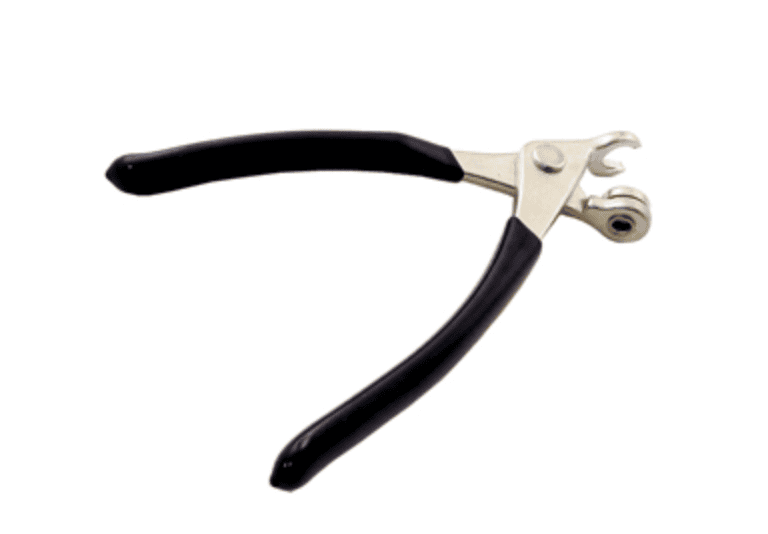
A Cleco is a temporary sheet metal fastener that is inserted through aligned holes in two or more pieces of material. A Cleco tool compresses the fastener so it can pass through the holes. When released, the fastener expands and pulls the sheets together.
Unlike screws, rivets, or welds, Clecos are not normally part of the finished assembly. Their job is to temporarily locate and hold components while the permanent joining process is established.
This makes them particularly useful for custom sheet metal assemblies where repeatable fit-up is important but building a dedicated fixture may not make sense.
Benefits of Cleco Fasteners in Sheet Metal Fabrication
1. Repeatable Alignment During Fit-Up
Clecos work especially well when locating holes can be incorporated into the sheet metal design. The holes establish the relationship between the components, and the Clecos help keep those components together while the assembly is positioned and joined.
At ASM, these locating holes can be laser cut along with the rest of the part geometry. This allows their position to be controlled by the same programmed geometry used to manufacture the parts.
It is important to understand that Clecos do not independently guarantee the final tolerance of a welded assembly. Final dimensions can also be affected by material thickness, forming tolerances, part geometry, weld sequence, heat input, and weld distortion. Clecos help establish and maintain the initial fit-up while the permanent joint is created.
2. Efficient Temporary Fixturing
For the right assembly, Clecos can reduce the amount of manual holding, clamping, or dedicated fixturing required during fit-up.
The process is straightforward: align the locating holes, insert the Clecos, verify the assembly, establish the permanent joint, and remove the temporary fasteners.
This can be particularly valuable for prototype and low-volume sheet metal fabrication. Building a custom welding fixture for a small quantity of parts can add engineering, fabrication, and setup time. Clecos can sometimes provide the necessary temporary alignment without that additional tooling.
Complex, large, or tightly controlled weldments may still require dedicated jigs or fixtures. Clecos are another tool available to the fabricator, not a replacement for proper fixturing in every application.
3. Mistake-Proof Assembly with Asymmetric Hole Patterns
One of the ways ASM uses Clecos is to design temporary locating holes in an asymmetrical pattern. Instead of placing the holes in a pattern that works in multiple orientations, we can position them so the components line up correctly in only the intended orientation.
This acts as a simple form of mistake-proofing during assembly. A panel that is backward or rotated incorrectly will not have the same Cleco hole alignment, helping the fabricator identify the problem before permanent joining begins.
Because the holes can be created during laser cutting, this assembly aid can be incorporated directly into the part geometry rather than relying solely on measurements during fit-up.
4. Potential Cost Savings on Prototype and Low-Volume Assemblies
Clecos can reduce fit-up labor, simplify temporary fixturing, and lower the risk of assembly errors on suitable jobs. Those advantages can be particularly important when fabricating only a few assemblies and the cost of designing and building a dedicated fixture would be difficult to justify.
The tradeoff is that temporary Cleco holes must be considered during the design process. If those holes cannot remain in the finished part, they may need to be welded closed and finished after assembly, which adds processing time.
For some applications, a permanent mechanical joining method such as riveting may also provide a more economical alternative to welding.
When Should You Use Cleco Fasteners?
Clecos are particularly useful when two or more sheet metal components need to maintain a known relationship during fit-up. Applications can include:
- Prototype welded assemblies
- Low-volume sheet metal assemblies
- Overlapping panels and covers
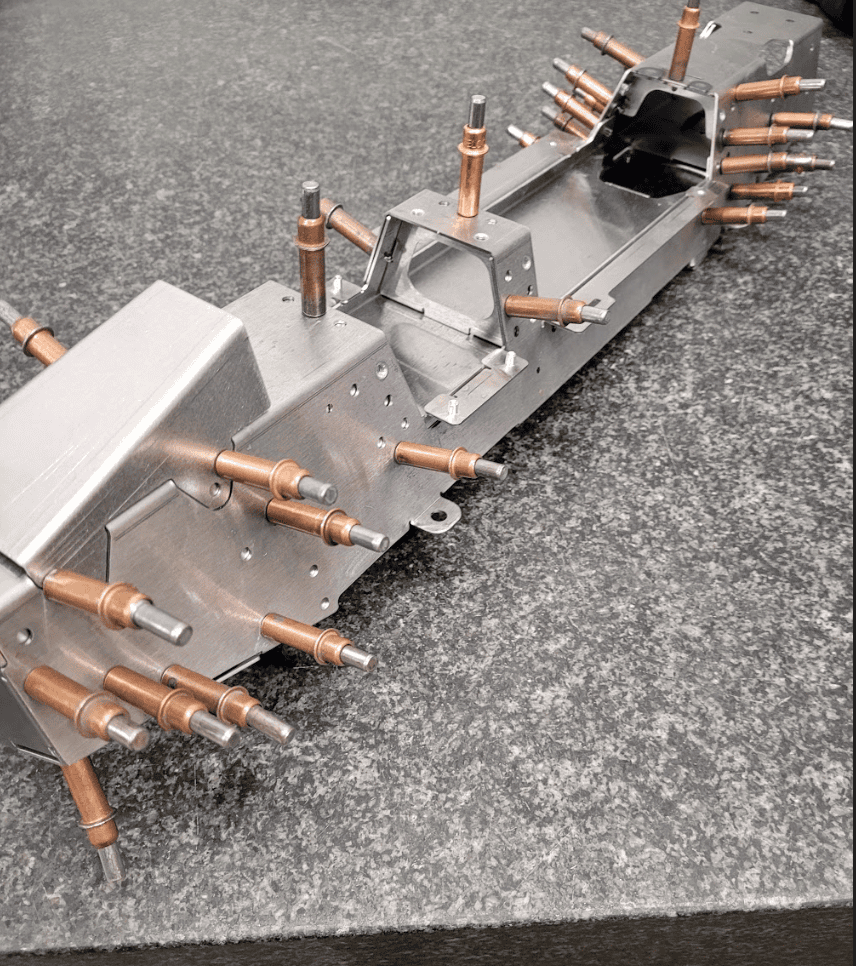
- Enclosures and chassis
- Riveted assemblies
- Assemblies containing multiple holes or features that must line up
- Parts where incorrect orientation could create an assembly problem
Clecos are less useful when there is no acceptable location for temporary holes, when the components require substantial three-dimensional restraint, or when the assembly is better controlled using a dedicated welding fixture.
Clecos vs. Other Sheet Metal Fixturing Methods
Clecos are one of several methods available for temporarily locating precision sheet metal components. The right method depends on the geometry, material, quantity, joining process, and tolerance requirements of the assembly.
| Method | Best Use | Primary Advantage | Consideration |
|---|---|---|---|
| Cleco Fasteners | Temporary sheet-to-sheet alignment | Fast, removable, and repeatable | Requires compatible locating holes |
| Clamps and Vises | General-purpose holding | Flexible and requires no dedicated holes | Can obstruct access and may not positively locate every feature |
| Magnetic Fixturing | Quick setup of ferrous components | Fast positioning and repositioning | Limited to magnetic materials and may not provide positive feature-to-feature location |
| Tack Welding | Establishing a welded assembly before final welding | Creates a strong temporary connection | Introduces heat and can contribute to distortion |
| Custom Jigs and Fixtures | Repeat production or tightly controlled assemblies | Excellent repeatability and restraint | Adds design, fabrication, and setup cost |
Cleco Fasteners and Weld Distortion
Clecos are useful for establishing the correct fit-up before welding, but they do not eliminate one of the biggest challenges in welded sheet metal assemblies: heat distortion.
As a weld is made, localized heating and cooling can cause sheet metal components to shrink, pull, or warp. This means an assembly that is correctly aligned before welding can still move as heat is introduced.
For that reason, Clecos are typically used as part of a broader assembly strategy. Proper tack placement, welding sequence, heat control, fixturing, and inspection may all be required depending on the design.
The goal is to establish accurate fit-up first and then control the permanent joining process so that the finished assembly meets the drawing requirements.
How Approved Sheet Metal Completes Assemblies Using Cleco Fasteners
When Clecos make sense for an assembly, we can incorporate the temporary fastening strategy directly into the manufacturing process.
- Identify locating points. Our team determines where temporary holes can be placed to effectively locate the components without interfering with critical features.
- Laser cut the Cleco holes. The locating holes are cut along with the rest of the part geometry using our laser cutting equipment.
- Create an asymmetric pattern when appropriate. We can arrange the holes so components cannot easily be inserted backward or in the wrong orientation.
- Fabricate and form the individual components. Each component proceeds through the required cutting, forming, and other fabrication operations.
- Align the components. During assembly, the Cleco holes provide defined locating points for bringing the individual pieces together.
- Insert the Clecos. A Cleco tool is used to install the temporary fasteners and hold the components in position.
- Verify the assembly. Critical dimensions, orientation, and fit-up can be checked against the drawing before permanent joining is completed.
- Establish the permanent joint. The assembly is tack welded, welded, riveted, or joined using the specified process.
- Remove the Clecos. Once the assembly is sufficiently secured, the temporary fasteners are removed.
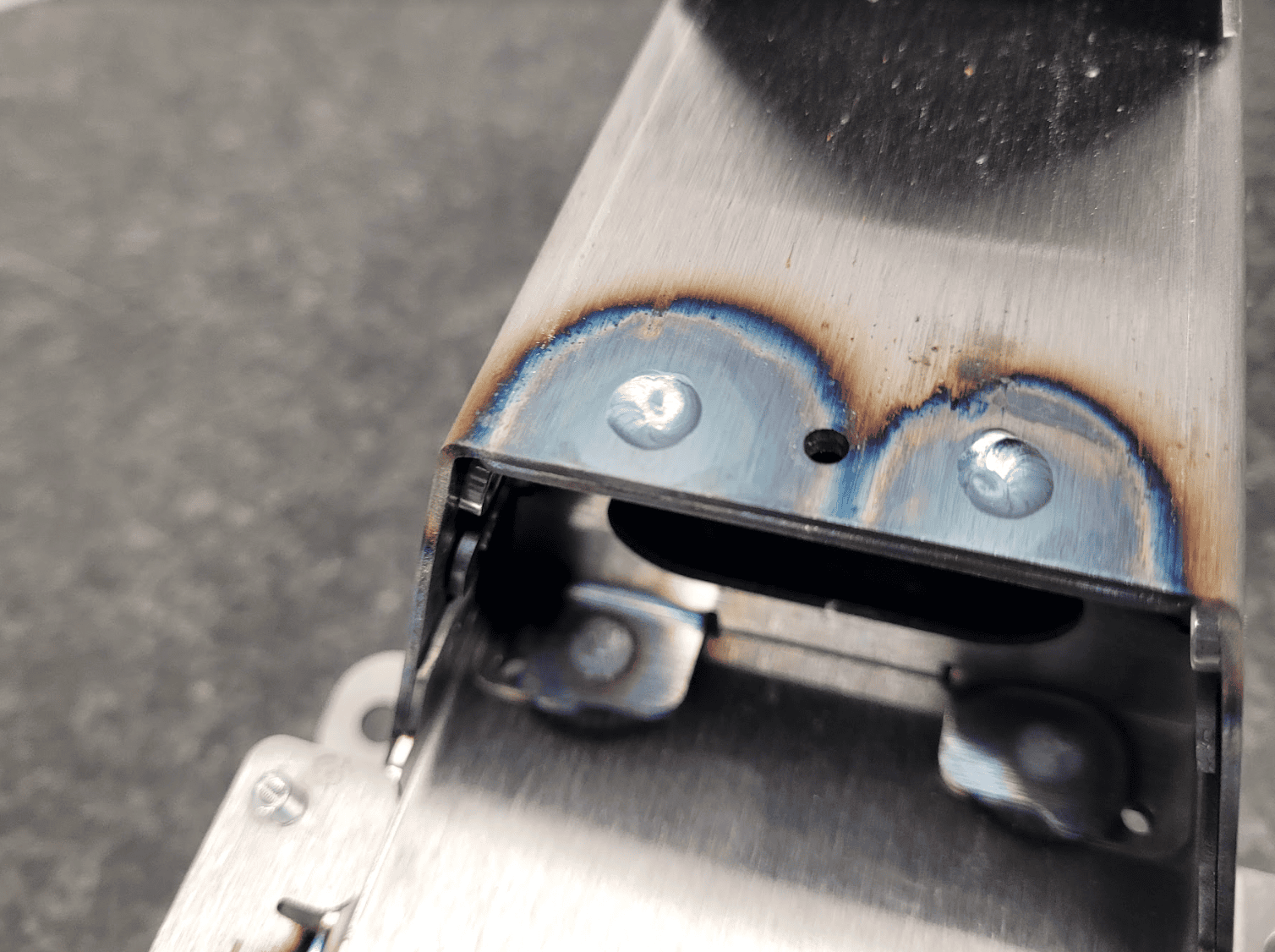
- Finish the temporary holes when required. If the Cleco holes are not allowed to remain in the finished part, they can be welded closed and finished as appropriate for the application.
What Size Should Cleco Holes Be?
The required hole diameter depends on the size of the Cleco fastener being used, so there is not one universal Cleco hole size that should be applied to every sheet metal design.
For example, on one ASM customer assembly we used 0.130" temporary holes through two pieces of sheet metal before TIG welding. That dimension was appropriate for the selected fastener and that particular assembly; it should not be treated as a standard hole size for every Cleco application.
If Cleco holes will be incorporated into your design, your fabricator can help determine an appropriate fastener size, hole diameter, quantity, and pattern based on the assembly.
Designing Cleco Holes into a Sheet Metal Assembly
Temporary holes may seem like a small detail, but their location can have a significant effect on how easily an assembly goes together.
Cleco locations should provide enough control to establish the required alignment without adding unnecessary holes that later need to be filled. They should also avoid interfering with bends, hardware, finished edges, weld joints, or other critical features.
When orientation matters, an asymmetric locating pattern can also function as a simple poka-yoke, or mistake-proofing feature, making it much more obvious when components are positioned incorrectly.
This is one reason it can be valuable to involve your sheet metal fabricator before the design is finalized. A small DFM change to the locating strategy can make the eventual assembly process faster, simpler, and more repeatable.
Build Better Sheet Metal Assemblies with the Right Fixturing Strategy
Cleco fasteners are not necessary for every assembly, but they are an extremely useful tool when a prototype or low-volume sheet metal fabrication requires repeatable temporary alignment. Combined with accurate laser-cut locating holes, thoughtful hole placement, proper welding practices, and dimensional inspection, they can help simplify even complicated assemblies.
To find out how our innovative manufacturing solutions can bring your design to life, request a quote today!


